
PICT Tracking Complete Guide to PICT Container Tracking Online in Pakistan
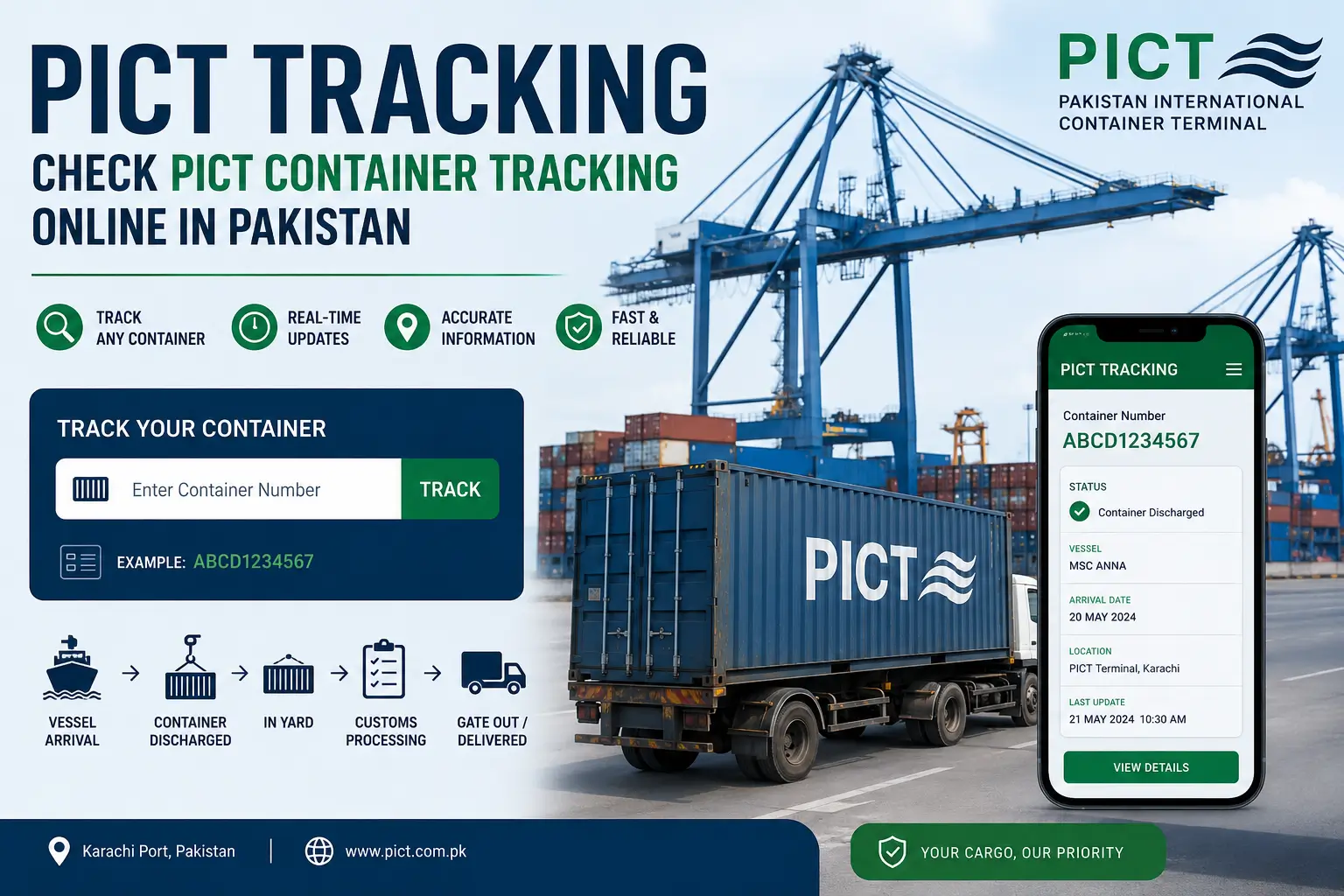
Shipping containers move across oceans, ports, terminals, and transportation networks every day. For importers, exporters, freight forwarders, and logistics professionals, tracking a container accurately is essential. This is where PICT Tracking system becomes important.
PICT Tracking allows users to monitor the status of their containers through the Pakistan International Container Terminal (PICT). Whether you are waiting for an import shipment or managing export cargo, tracking information helps you stay informed about container movement, arrival schedules, and terminal status.
In this guide, we will explain everything you need to know about PICT tracking, including how it works, how to perform PICT container tracking online, and why it matters for businesses operating in Pakistan.
What is PICT?
PICT stands for Pakistan International Container Terminal. It operates at Karachi Port and serves as one of Pakistan’s major container handling facilities.
The terminal handles thousands of containers moving through international trade routes. Importers and exporters rely on PICT services to manage container arrivals, departures, storage, and cargo handling.
The facility plays a significant role in Pakistan’s supply chain by connecting local businesses with global markets.
Key Functions of PICT
- Container handling
- Import cargo processing
- Export cargo processing
- Vessel operations
- Cargo storage services
- Container status management
- Online tracking services
Because international shipping involves multiple stakeholders, tracking tools help improve visibility throughout the logistics process.
What is PICT Tracking?
PICT Tracking is an online system that allows users to check the current status of containers handled through Pakistan International Container Terminal.
Instead of making phone calls or sending emails, users can access tracking information online and receive updates about container activity.
Tracking systems help answer common questions such as:
- Has the container arrived at Karachi Port?
- Is the container available for pickup?
- Has customs clearance started?
- Is the container still inside the terminal?
- Has the shipment been delivered?
Having quick access to this information saves time and improves shipment planning.
Why PICT Container Tracking Matters
Imagine waiting for a shipment worth thousands of dollars while having no idea where it is. That situation can create delays, confusion, and unnecessary stress.
PICT tracking solves this problem by providing shipment visibility.
Benefits of PICT Container Tracking
Better Shipment Planning
Businesses can prepare transportation arrangements based on container arrival schedules.
Reduced Delays
Real-time updates help companies identify issues before they become major problems.
Improved Customer Service
Freight forwarders and logistics providers can share accurate shipment information with customers.
Enhanced Supply Chain Visibility
Tracking allows businesses to monitor cargo movement more effectively.
Time Savings
Online tracking eliminates the need for repeated communication with shipping agents.
How PICT Container Tracking Works
The tracking process relies on container information recorded at different stages of terminal operations.
Whenever a container reaches a milestone, the system updates its status.
These updates may include:
- Vessel arrival
- Container discharge
- Gate-in status
- Gate-out status
- Storage information
- Customs-related processing
- Container release
Users can access this information through online tracking services.
The process works much like parcel tracking. However, container tracking focuses on large shipping units moving through ports and terminals.
PICT Container Tracking Online
One of the biggest advantages of modern logistics is digital access to shipment information.
PICT container tracking online allows users to check shipment details from any location with internet access.
This means you can:
- Monitor imports from your office
- Check shipment status while traveling
- Review container information before arranging transportation
- Stay informed without contacting multiple parties
Online tracking improves efficiency and supports faster decision-making.
Information Required for PICT Tracking
To perform a tracking search, users typically need one of the following details:
Container Number
The container number is the most common tracking reference.
Example:
ABCD1234567
Each container receives a unique identification number.
Bill of Lading Number
Many tracking systems also support searches using the Bill of Lading (B/L) number.
Booking Reference
Some shipping-related systems provide tracking through booking references.
Always enter the information carefully to avoid incorrect results.
PICT Tracking Container Status Explained
When using a tracking system, you may encounter various shipment statuses.
Understanding these terms helps you interpret tracking results correctly.
Arrived
The vessel carrying the container has reached the port.
Discharged
The container has been unloaded from the vessel.
In Yard
The container is currently stored within the terminal yard.
Customs Processing
Authorities are reviewing shipment documentation and clearance requirements.
Released
The container is ready for collection or onward transportation.
Gate Out
The container has left the terminal.
These updates provide visibility throughout the shipment journey.
PICT Container Tracking Karachi
Since Pakistan International Container Terminal operates at Karachi Port, many users search for PICT container tracking Karachi. Karachi serves as Pakistan’s primary maritime gateway and handles a significant portion of the country’s international trade.
Businesses located across Pakistan often rely on Karachi-based ports for imports and exports. As a result, tracking systems play a vital role in helping companies coordinate transportation between Karachi and other regions.
PICT Container Tracking Pakistan
International trade continues to grow in Pakistan, increasing the demand for reliable logistics information.
PICT container tracking Pakistan helps businesses across industries monitor cargo efficiently.
Industries that frequently use container tracking include:
- Manufacturing
- Retail
- E-commerce
- Textile exports
- Automotive imports
- Consumer goods distribution
Accurate tracking data supports smoother operations and better inventory management.
Common Users of PICT Tracking
Container tracking is not limited to large corporations.
Many different users benefit from shipment visibility.
Importers
Importers monitor incoming cargo and prepare customs documentation.
Exporters
Exporters verify shipment movement after cargo leaves Pakistan.
Freight Forwarders
Freight professionals use tracking updates to coordinate logistics activities.
Customs Agents
Tracking information helps customs representatives manage shipment processing.
Logistics Companies
Transport providers rely on status updates when scheduling deliveries.
Challenges Solved by PICT Online Tracking
Without digital tracking, businesses face several challenges.
Lack of Visibility
Companies may struggle to determine shipment locations.
Communication Delays
Repeated calls and emails can slow decision-making.
Transportation Planning Issues
Uncertain arrival times can disrupt delivery schedules.
Inventory Problems
Delayed shipment information may affect stock management.
PICT online tracking addresses these issues by providing accessible shipment data.
Best Practices for Tracking Containers
To get the most value from tracking services, follow these recommendations.
Save Container Numbers
Store container references in a secure location.
Check Updates Regularly
Review tracking information throughout the shipment process.
Verify Shipment Details
Ensure that container numbers and documentation match.
Coordinate with Logistics Partners
Share tracking information with transport providers and customs agents.
Monitor Important Milestones
Pay attention to arrival, discharge, release, and gate-out updates.
These simple steps can improve logistics efficiency.
How Container Tracking Improves Supply Chain Management
Modern supply chains depend on visibility.
When companies know where shipments are located, they can make better decisions.
Better Forecasting
Accurate shipment data helps estimate delivery timelines.
Reduced Costs
Businesses can avoid unnecessary storage charges and transportation delays.
Improved Customer Experience
Customers appreciate timely updates regarding shipment progress.
Enhanced Operational Efficiency
Teams spend less time searching for shipment information.
As global trade becomes more competitive, tracking technology continues to grow in importance.
The Role of Digital Tracking in Modern Logistics
A decade ago, many businesses relied heavily on manual communication for shipment updates.
Today, digital tracking systems have transformed logistics operations.
Benefits include:
- Faster access to information
- Greater transparency
- Improved shipment monitoring
- Better coordination between stakeholders
- Reduced administrative workload
Digital tools help businesses respond more quickly to changing logistics conditions.
Frequently Encountered Tracking Issues
Although tracking systems are highly useful, users may occasionally encounter problems.
No Results Found
This often occurs when incorrect tracking information is entered.
Delayed Updates
System updates may take time depending on operational processes.
Incorrect Container Number
A small typing error can prevent successful tracking.
Shipment Still in Transit
The container may not yet have reached a status update milestone.
Double-checking information usually resolves most tracking concerns.
Future of Container Tracking in Pakistan
Technology continues to reshape the logistics sector.
Future improvements may include:
- Enhanced automation
- Faster data synchronization
- Improved tracking accuracy
- Better integration with shipping lines
- Advanced shipment visibility tools
As Pakistan’s trade infrastructure expands, tracking systems will become even more valuable for businesses and logistics professionals.
Conclusion
PICT Tracking provides a practical way to monitor container movements through the Pakistan International Container Terminal. Whether you need PICT container tracking online, PICT container tracking Karachi, PICT container tracking Pakistan, or general shipment visibility, tracking systems help simplify logistics operations.
Accurate tracking information supports better planning, reduces uncertainty, and improves supply chain performance. Businesses that actively monitor container status can make faster decisions, coordinate transportation more effectively, and provide better service to customers.
As international trade continues to grow, reliable tracking solutions will remain an essential part of efficient logistics management. By understanding how PICT tracking container systems work, businesses can stay informed and maintain greater control over their shipments.
Frequently Asked Questions (FAQs)
PICT Tracking is an online service that allows users to check the status and movement of containers handled through the Pakistan International Container Terminal (PICT) at Karachi Port.
You can use PICT container tracking online by entering your container number, Bill of Lading (B/L) number, or other shipment reference details into the tracking system to view the latest container status.
PICT container tracking provides details such as vessel arrival, container discharge status, yard location, customs processing updates, container release information, and gate-out status.
PICT tracking is available for containers processed through Pakistan International Container Terminal in Karachi. Shipments handled at other terminals may require separate tracking systems.
PICT tracking helps importers and exporters monitor shipment progress, plan logistics activities, reduce delays, and improve supply chain visibility by providing real-time container status updates.

There are no comments