
⚡ Quick Summary: How to Locate a Hidden Tracker
Finding a covert tracking device requires a systematic approach. If you suspect your vehicle is being monitored without your consent, execute these four diagnostic steps immediately:
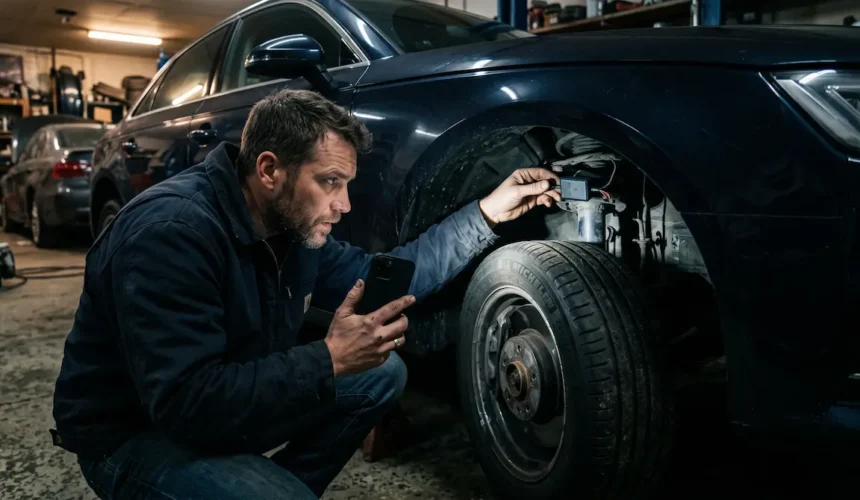
- Conduct an Exterior Sweep: Use a flashlight to inspect the wheel wells, the inner lip of the rear bumper, and the metal chassis for small magnetic boxes.
- Check the OBD-II Port: Look under the driver’s side steering wheel. If an unfamiliar plastic module is plugged into the diagnostic port, it is likely a live GPS logger.
- Perform a Bluetooth Scan: Open your smartphone’s Bluetooth settings or use a tracker detection app to scan for nearby Apple AirTags or Tile devices moving with you.
- Inspect the 12V Battery: Open the hood and look for unauthorized, non-factory wires spliced directly into your car battery terminals, which power hardwired trackers.
If you locate a hardwired device spliced into your vehicle’s electrical harness, consult a certified auto-electrician before attempting to cut any wires to avoid disabling the engine.
📖 Sweep Guide Navigation
1. Warning Signs: Is Your Car Bugged?
Finding a hidden device can be incredibly stressful. While many people intentionally deploy a trusted vehicle GPS tracking system for security against theft, unauthorized parties sometimes abuse cheap tracking tech to monitor your movements without consent.
If your car battery suddenly drains much faster than normal—especially after sitting overnight—it could be caused by an unauthorized 4G module constantly pulling power to transmit your coordinates. (For a deeper dive into this specific issue, review our guide on vehicle battery drain diagnostics). Furthermore, if you hear faint, strange buzzing sounds behind the dashboard, or notice small, unfamiliar black boxes attached underneath your vehicle, it is time to perform a manual sweep.
2. The Most Common Hiding Spots on a Vehicle
Criminals and stalkers do not place tracking modules where you can easily spot them. They rely on dark, hard-to-reach crevices. Here is exactly where you need to check:
- Inside the Bumper & Wheel Wells: Magnetic “slap-and-track” battery modules are frequently stuck inside the plastic lip of the rear bumper or high up inside the wheel arches because they are fast to install and hard to notice without lying on the ground.
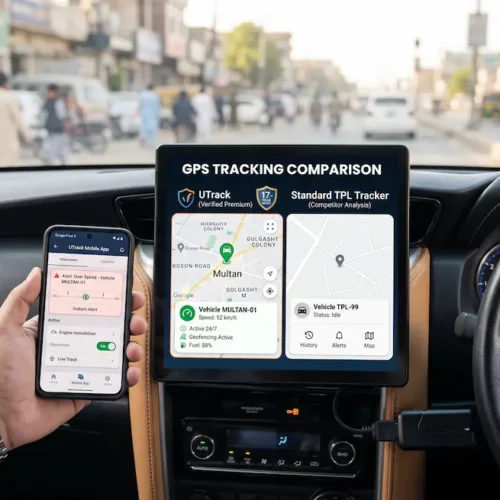
- The OBD-II Port: Look under your steering column. If you see a plastic dongle plugged into the diagnostic port, it is a tracker. This is a common location for dealership or repo trackers. (If you *want* legal, warranty-safe security, this is actually exactly where the UTrack OBD Device plugs in securely).
- Behind the Dashboard: Hardwired devices require access to ignition and power lines. Unprofessional installers will stuff the module directly behind the fuse box or the stereo console, wrapping it poorly in cheap electrical tape.
3. Step-by-Step: Sweeping the Car
Physical & Digital Inspection
Start with a flashlight and a mirror on a telescoping stick. Run the mirror along the undercarriage, paying special attention to the metallic fuel tank straps and cross-members where strong magnets can easily attach.
Next, check for Bluetooth “tags.” Devices like the Apple AirTag have become notoriously common for discreet tracking. If you are an iPhone user, iOS will automatically alert you if an unknown AirTag is traveling with you. Android users can utilize the built-in “Unknown Tracker Alerts” feature in their safety settings. You can read Apple’s official guidance on unwanted tracking alerts here.
When to Call a Professional
If your smartphone scan reveals an active GSM or GPRS device, but you physically cannot find it, you need to bring the vehicle to a certified auto-electrician or a PTA-approved tracking company. Professionals utilize specialized RF (Radio Frequency) bug detectors to sweep the cabin for active cellular transmissions. Furthermore, if you *do* find a hardwired module, do not cut the wires yourself. Slicing the wrong wire could trigger an immobilizer relay and permanently disable your fuel pump.
4. Why Trackers Are Placed & Legal Framework
Before you panic, determine if the tracker has a legal right to be there. In Pakistan, finding an unexpected unit does not automatically mean malicious intent.
- Bank Financed & Leased Cars: If you purchased the car through bank financing or a dealership installment plan, they legally install trackers to recover the asset if you default on monthly payments.
- Corporate Fleets: If the car belongs to your employer, fleet management monitoring is standard protocol.
However, if you outright own the car and find a device, it is unauthorized. Telematics inside Pakistan is heavily regulated by the Pakistan Telecommunication Authority (PTA). Only licensed companies have the legal right to operate M2M tracking SIMs.
5. The Safe Alternative: Authorized Security Tiers
Once you have removed an illegal or cheap tracking bug, you should secure your vehicle legally. A proper system gives you direct app access and allows you to utilize an engine kill switch to prevent future theft. Explore our authorized telematics packages below:
| Package Name | Hardware Type | Price (PKR) | Core Security Features | Action |
|---|---|---|---|---|
| Most Popular Support Package | Covert Hardwired | Rs. 13,500 | Remote Engine Cutoff, Internal Backup Battery, 24/7 Control Room. | Buy Now |
| OBD Tracker | Plug-and-Play Port | Rs. 18,000 | Zero Wire Cutting (100% Warranty Safe), Unplug Tamper Alerts. | Buy Now |
6. Frequently Asked Questions (FAQ)
How do I know if someone put a tracker on my car?
Look for unfamiliar devices under the bumpers, unexplained fast battery drain, phone alerts for unknown Apple AirTags or Bluetooth tags moving with you, or spliced wiring hidden under the driver’s side dashboard.
Can I find a hidden tracker using my smartphone?
Yes. iPhones will automatically notify you if an unknown Apple AirTag is moving with you. Android users can use Google’s built-in Unknown Tracker Alerts in their settings or download specialized Bluetooth scanning apps to sweep the immediate vehicle area.
Where are hidden GPS trackers usually installed?
Common magnetic hiding spots include inside the plastic wheel wells, underneath the rear bumper, and attached high up on the metal chassis. Hardwired trackers are usually stuffed behind dashboard panels, inside the glovebox casing, or wired directly to the main 12V battery.
Is it legal to track a car in Pakistan?
Yes, but only when it is installed by a PTA-approved and licensed telematics company, and with the explicit consent of the vehicle’s legal owner. For example, installing our Support Package to protect your own property is entirely legal. Installing unauthorized trackers for stalking or espionage is strictly illegal. If your legal tracker alerts you to a theft, refer to the proper stolen vehicle recovery process alongside the CPLC.
Should I remove a suspicious tracker myself?
If it is a simple magnetic battery tracker with no wires, you can safely pull it off. However, if the device is hardwired into your car’s electrical harness (such as an advanced unit like our Executive Plus), do not cut the wires yourself. Seek a certified auto-electrician to safely disconnect it without accidentally tripping a fuel pump immobilizer.
Take Back Control of Your Privacy
Don’t let unauthorized third parties track your movements. Clear out illegal bugs and secure your vehicle properly with a legally verified, PTA-approved security system managed entirely from your own smartphone.