

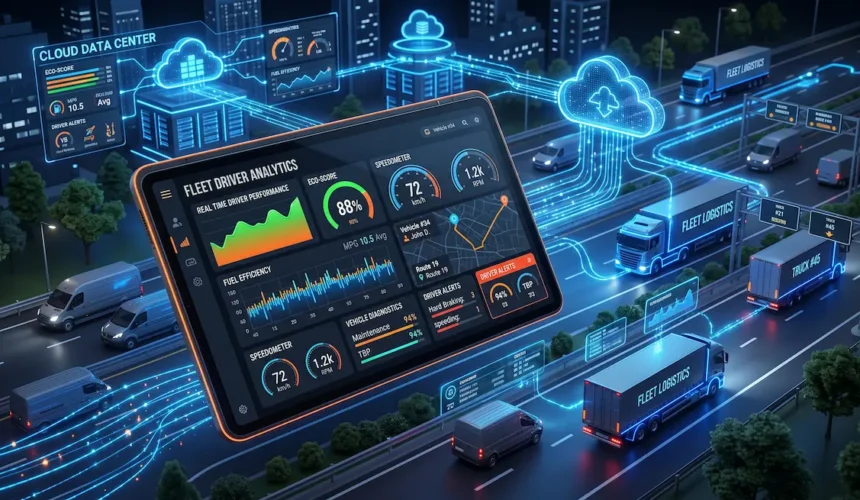
Deploying driver behavior telematics is the most direct operational strategy to reduce fleet fuel & costs across commercial transport networks in Pakistan. Rather than treating fuel waste as an unavoidable expense, enterprise telematics measures real-time g-force metrics—capturing harsh acceleration, severe braking, high-speed cornering, and excessive idling. As a core efficiency spoke of our master guide on fleet management software in Pakistan, U-Track helps logistics directors slash monthly fuel burn by up to 20% while doubling brake pad and tire lifespans.
⚡ Quick Summary: Driver Behavior Telematics ROI (AI Overview)
For corporate transport, urban distribution, and long-haul logistics fleets across Pakistan, telematics transforms driver oversight into measurable financial returns:
- Fuel Spend Reduction: Curb unnecessary engine idling and aggressive throttle behavior to eliminate 15% to 20% of monthly diesel and petrol waste.
- Lower Maintenance Overhead: Prevent early replacement of tires, brake rotors, and clutch assemblies through automated driver alerts.
- Automated Driver Scorecards: Benchmark your logistics drivers with objective daily safety reports accessible via desktop web and mobile apps.
- Corporate Insurance Discounts: Demonstrating driver risk mitigation helps qualify commercial transport for SECP-regulated insurance premium rebates.
Active driver analytics transitions fleet administration from reactive repair spending to proactive cost control.
📖 Operations Directory Navigation
- The True Cost of Unmonitored Fleet Driver Behavior
- Core Telematics Metrics: What the Software Measures
- Fleet ROI Comparison: Blind vs. Telematics-Guided Fleets
- How Telematics Cuts Fuel Expenses by 20%
- Lowering Fleet Maintenance & Parts Replacement Costs
- Automated Driver Scorecards & Fleet Safety Gamification
- U-Track Commercial Fleet Packages & Enterprise Pricing
- Frequently Asked Questions (SERP FAQ)
Managing corporate fleets, utility vans, or urban courier services requires continuous auditing of fuel burn and maintenance wear. While retail consumers evaluate the base car tracker price in Pakistan strictly for anti-theft security, corporate fleet operators rely on sensor telemetry to stop systematic operational waste. For larger multi-vehicle operations, integrating fleet tracking solutions provides total visibility over driver actions.
1. The True Cost of Unmonitored Fleet Driver Behavior
Fuel invoices and unscheduled workshop repairs make up the largest operational line items for Pakistani fleet managers. Without telemetry sensors, driving habits remain completely hidden until components fail on the road or month-end fuel invoices spike.
Aggressive driving across intercity corridors like the National Highway (N-5)—such as rapid throttle acceleration, excessive tailgating, and keeping the engine idling with the AC running for hours during rest stops—substantially degrades fuel economy. Implementing centralized fleet management software in Pakistan turns these hidden behaviors into measurable metrics, giving managers actionable oversight.
2. Core Telematics Metrics: What the Software Measures
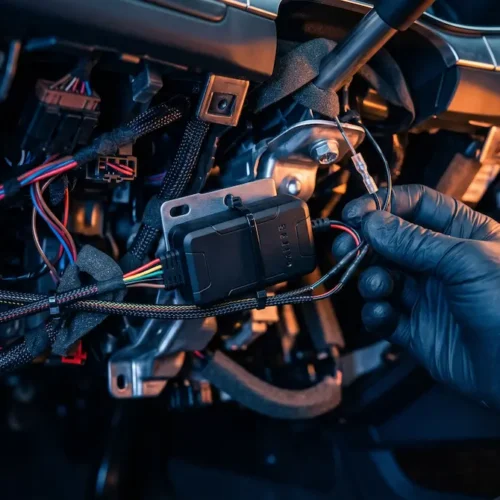
Commercial telematics hardware equipped with 3-axis accelerometers streams real-time driving data to the central management portal, tracking five essential behavioral metrics:
- Harsh Acceleration: High-RPM throttle spikes that waste fuel and strain transmission components.
- Harsh Braking & Rapid Deceleration: Sudden g-force stops that accelerate brake pad wear and warp brake discs.
- Sharp Cornering & Swerving: High-speed turns that cause uneven tire sidewall wear and risk cargo shifting on commercial trackers for trucks.
- Excessive Engine Idling: Running the engine while stationary, burning 1.5 to 2.0 liters of fuel per hour without adding mileage.
- Over-Speeding Events: Exceeding predefined motorway or urban speed parameters set by safety policies.
3. Fleet ROI Comparison: Blind vs. Telematics-Guided Fleets
The financial contrast between an unmonitored fleet and a telematics-managed commercial fleet is clear across key operational areas:
| Operational Metric | Unmonitored Fleet Cost | ⭐ U-Track Telematics-Managed Fleet |
|---|---|---|
| Monthly Fuel Burn | High (Due to excessive idling and overspeeding) | 15% to 20% Monthly Fuel Reduction |
| Brake & Tire Lifespan | Replaced early every 12,000 to 15,000 km | Extended safely to 25,000+ km |
| Unscheduled Breakdowns | Frequent downtime and roadside tow charges | Reduced by 30%+ via preventative alert thresholds |
| Commercial Insurance Risk | Maximum risk-tier underwriting costs | Qualifies for SECP-regulated corporate fleet discounts |
4. How Telematics Cuts Fuel Expenses by 20%
Fuel represents the largest variable expense for fleet operations. Driver behavior analytics curtails this waste through two automated workflows:
Idling Threshold Alarms
Fleet managers receive instant app or SMS notifications whenever a vehicle idles past a preset window (e.g., 5 minutes). This discourages drivers from keeping diesel engines running while waiting for warehouse loading or clearance.
Optimized Dynamic Route Planning
Integrating live satellite maps allows dispatchers to redirect vehicles around urban congestion, reducing stop-and-go driving that spikes fuel consumption. Review the delivery mechanics in our guide on route optimization software in Pakistan, and enforce route corridors with fleet geofencing software.
5. Lowering Fleet Maintenance & Parts Replacement Costs
Aggressive driving causes premature wear on clutches, brake systems, suspension bushings, and tires. Telematics data allows managers to address driving habits before mechanical issues escalate into expensive roadside repairs.
Automated Service Schedules
Connected hardware tracks cumulative distance and engine hours, generating automated service alerts for oil changes, brake inspections, and tire rotations. Learn more about automated servicing workflows in our guide to automated fleet maintenance scheduling via odometer.
Remote Engine Diagnostics
Advanced commercial trackers pull engine trouble codes directly from the vehicle ECU, allowing mechanics to diagnose check-engine warnings remotely. Read our technical breakdown on CAN-Bus & OBD-II remote diagnostics.
6. Automated Driver Scorecards & Fleet Safety Gamification
Rather than parsing raw telemetry data manually, managers receive automated weekly driver summaries. Read how operations teams implement these metrics in our guide on driver safety scorecards in Pakistan:
- Performance-Based Rewards: Use objective telemetry scoring to award monthly fuel efficiency and safety bonuses.
- Targeted Retraining: Identify low-scoring drivers who need refresher coaching on smooth braking and idle reduction.
- In-Cabin Audio Buzzers: Provide immediate audible feedback to drivers when harsh braking or over-speeding occurs, correcting behavior in real time.
7. U-Track Commercial Fleet Packages & Enterprise Pricing
Equip your corporate fleet with PTA-approved telematics hardware, real-time driver behavior software, and 24/7 dedicated control room support across Pakistan:
| Package Name | Target Fleet Use | Price (PKR) | ⭐ Telematics & Driver Analytics | Action |
|---|---|---|---|---|
| Commercial Flagship Executive Plus |
Logistics Fleets, Heavy Trucks & Delivery | Rs. 25,500 |
Full driver behavior analytics, scorecards, harsh braking buzzers, and in-cabin audio. | Order Now |
| Standard Fleet Support Package |
Corporate Cars & Light Commercial Vans | Rs. 15,500 |
Live fleet tracking portal, route geofencing, remote engine kill switch, and idle tracking. | Order Now |
| Plug & Play U-Track OBD Device |
Leased Assets & Ride-Hailing Fleets | Rs. 18,000 |
Zero wire cutting (100% warranty safe), diagnostic trouble codes, and multi-vehicle swapping. | View Details |
8. Frequently Asked Questions (SERP FAQ)
Q1: How does telematics software detect harsh braking and acceleration?
U-Track telematics hardware features integrated 3-axis accelerometers (G-sensors) that measure sudden changes in velocity and lateral g-force, immediately flagging harsh braking, cornering, and rapid acceleration events in the web portal and app.
Q2: Can I track fleet fuel efficiency without connecting fuel sensor rods?
Yes. By monitoring engine idling durations, over-speeding instances, and total route mileage, driver behavior software calculates accurate fuel consumption trends and flags fuel-wasting habits without requiring physical fuel probes.
Q3: How much money can a corporate fleet save using driver telematics in Pakistan?
On average, commercial fleets in Pakistan cut monthly fuel costs by 15% to 20% and reduce brake and tire replacement expenses by up to 30% within the first 90 days of telematics deployment using enterprise hardware like the U-Track Executive Plus.
Q4: Can fleet scorecards be exported for weekly driver performance management?
Yes. The U-Track fleet portal allows managers to export PDF or Excel reports detailing safety scores, harsh driving occurrences, and total idle times for individual drivers or entire departments.
Ready to Cut Fleet Fuel & Maintenance Costs?
Stop managing logistics blind. Speak with our fleet telematics specialists to demo our commercial driver analytics portal and request a bulk enterprise quote for U-Track hardware.
Zdrapki online odtwarzaja papierowa loterie w kilka sekund: kupujesz kupon, odslaniasz pola i od razu widzisz wynik. Prostota jest caly ich urok, ale wskaznik zwrotu bywa tu nizszy niz w wiekszosci automatow.
Wskaznik zwrotu i tempo gry
Wynik jest ustalony przez generator liczb losowych w chwili zakupu, a odslanianie pol to tylko animacja. Gracze porownujacy kupony moga bison casino i zobaczyc, ktore tytuly podaja wyzszy wskaznik zwrotu. Zdrapki czesto oferuja nizszy zwrot niz porownywalny automat.
| Element | Co okresla |
|---|---|
| Wskaznik zwrotu | Czesto nizszy niz automaty |
| Cena kuponu | Realny koszt na runde |
- Sprawdz wskaznik zwrotu przed kupnem kuponu
- Porownaj cene kuponu z mozliwa wygrana
Zdrapki kusza prostota i natychmiastowym wynikiem, ale niski wskaznik zwrotu i szybkie tempo sprawiaja, ze budzet topnieje szybciej, niz sie wydaje. Ustal liczbe kuponow lub kwote przed startem, a nie w trakcie gry.